Home Exteriors Cleaned Before They Deteriorate Further
Residential pressure washing in Lauderhill for driveways, walkways, and home exteriors with embedded dirt, staining, or visible biological growth
A driveway that was once a clean light gray has turned uneven and dark. Walkways leading to the front entry show green biological streaking at the edges. The side of the house has a waterline of grime at the foundation that no hose-down removes. These are the conditions that residential pressure washing is designed to address, and JMY Services and Solutions Corp provides this service to homeowners throughout Lauderhill who want their property to look maintained without the buildup requiring replacement-level intervention. The difference between a surface that looks worn and one that looks clean is often one thorough pressure wash cycle.
JMY Services and Solutions Corp approaches residential pressure washing by identifying the surface material and contamination type before setting pressure levels. Concrete flatwork handles high-pressure applications well when a surface cleaner attachment is used for even coverage, while painted foundations, decorative pavers, and wood deck boards require reduced pressure and wider fan angles to avoid surface damage. The work sequences from top to bottom so that runoff from upper surfaces does not re-deposit material on areas already cleaned.
Request an on-site review of your property's exterior surfaces to identify the areas that will benefit most from pressure washing and what approach each surface requires.
What You Notice Once the Exterior Is Finished
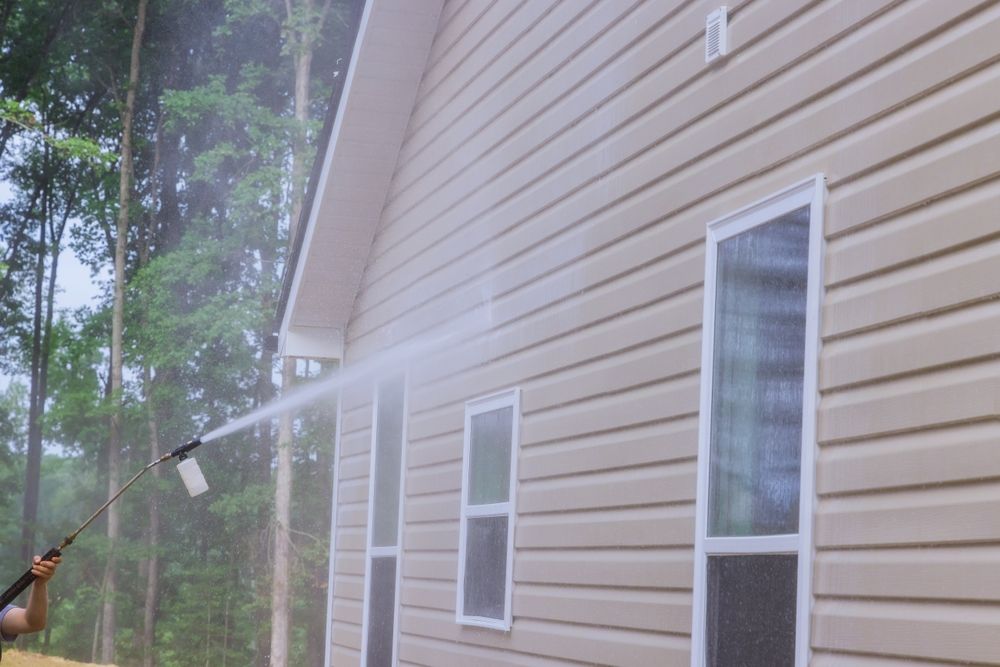
Residential pressure washing produces changes that are visible the same day the work is completed. Concrete driveways return to their original aggregate color rather than the biological gray-green cast that develops over time. Staining at expansion joints, rust runs below metal fixtures, and oil deposits near garage aprons are removed by the combination of mechanical force and the correct nozzle pattern for that surface. For homes with painted block or stucco lower courses, a reduced-pressure rinse removes surface dirt without disturbing the coating.
What homeowners notice after completion is that the property reads as actively maintained rather than recently neglected—a distinction that matters both for daily livability and for how the home presents to visitors. Surfaces that had a patchy, stained appearance from years of accumulated biological growth and traffic return to a uniform color and texture. Pool deck areas and patio surfaces that had become slippery due to algae accumulation are safe to walk on again once that biological layer is removed.
Residential pressure washing covers exterior hardscape surfaces and concrete or masonry home exteriors; wood siding, delicate stucco finishes, and roofing surfaces are better suited to soft washing, where low pressure and cleaning solutions handle the contamination without the risk of surface damage. Identifying which surfaces fall into each category before work begins keeps the cleaning effective and the materials intact.
Answers About How the Work Is Done
The following questions focus on the residential pressure washing process and what homeowners in Lauderhill can expect from start to finish.
How is the correct pressure setting determined for different surfaces around a home?
Pressure is matched to the surface material and its condition—sealed concrete flatwork tolerates higher PSI with a rotary surface cleaner, while painted surfaces, older pavers with worn joint material, and wood require lower settings and wider spray patterns to clean without causing damage.
What preparation should homeowners complete before the pressure washing crew arrives?
Outdoor furniture, planters, vehicles, and any items stored near the work areas should be moved clear, and garden beds adjacent to hardscape being washed should be noted so runoff direction can be managed appropriately during the rinse.
Why does concrete turn dark or greenish over time, and what does pressure washing remove?
The discoloration comes from algae, mold, and accumulated surface debris embedding into the concrete's porous surface; pressure washing dislodges this material mechanically, and for biological growth specifically, a pre-treatment solution breaks it down before the high-pressure rinse carries it away.
How does the age and construction of homes in Lauderhill affect residential pressure washing decisions?
Many residential properties in Lauderhill were built in the 1970s and 1980s using concrete block construction with stucco or painted finishes; these older surfaces have often been repainted multiple times, and identifying the paint condition before applying pressure determines whether high-pressure application is safe or whether a lower-pressure technique is required to avoid lifting layers.
What is the difference between using a standard garden hose attachment and professional pressure washing equipment?
Consumer attachments operate at a fraction of the PSI and flow rate of commercial equipment and do not produce the force required to dislodge embedded biological growth or penetrate concrete surface texture—the result is surface-level rinsing rather than genuine cleaning of the material.
JMY Services and Solutions Corp handles residential pressure washing for homeowners in Lauderhill who want exterior surfaces cleaned thoroughly and without damage to the materials underneath. Connect with JMY Services and Solutions Corp to identify the surfaces at your property and schedule the work at a time that works for your household.