Cleaning Methods That Do Not Damage What They Clean
Commercial soft washing in Lauderhill for building facades, roofing, and exterior cladding with organic staining or biological growth
Stucco facades, painted concrete block, and aged roofing materials are common across commercial properties in Lauderhill, and these surfaces share a characteristic: high-pressure water removes the contamination but also degrades the substrate. JMY Services and Solutions Corp offers commercial soft washing as the alternative—a low-pressure application combined with eco-friendly cleaning solutions that breaks down algae, mold, and mildew at the root rather than blasting the surface clean. Property managers working with older commercial buildings in particular notice the difference, because soft washing does not open surface pores, lift coatings, or displace roofing granules the way pressure washing can.
The soft washing process at JMY Services and Solutions Corp begins with identifying the contamination type—algae, mildew, lichen, or accumulated dirt—and selecting the appropriate cleaning solution concentration. Low-pressure application delivers the solution across the surface, where it dwells and penetrates organic growth before a controlled rinse removes it. This sequencing matters because rinsing before the dwell time is complete leaves biological material partially intact, which allows regrowth to begin faster.
Schedule a surface evaluation to determine which areas of your commercial property are candidates for soft washing and what contamination is present.
How Soft Washing Addresses Biological Growth on Commercial Surfaces
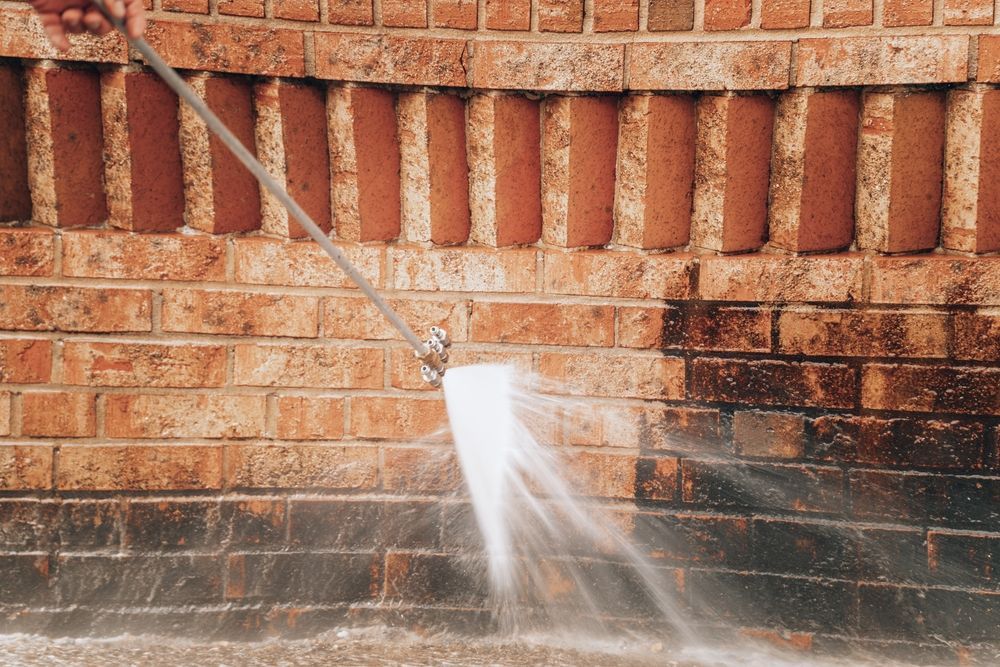
Soft washing works by addressing the biological source of staining rather than removing staining through mechanical force alone. Algae and mold spores attach to porous surfaces and feed on moisture and organic debris; cleaning solutions used in soft washing are formulated to break down the cell structure of these organisms, which is why the results last longer than pressure washing on the same surface type. Roofing shingles, stucco exterior walls, painted block facades, and fencing are all surfaces where this approach is appropriate.
After soft washing is completed, the visible changes are specific and observable: dark streaking on roof planes disappears, green or black discoloration on stucco returns to the original surface color, and biological staining on fencing and signage structures is no longer present. Because the treatment addresses the organism rather than just the appearance, regrowth timelines are extended compared to pressure washing alone on the same surfaces.
Commercial soft washing is scoped to exterior surfaces accessible from ground level or standard equipment reach; surfaces with structural damage, missing caulking at penetrations, or compromised sealant around windows require those conditions to be addressed before washing, because low-pressure water can still find entry points through deteriorated assemblies. The eco-friendly cleaning solutions used are safe for surrounding landscaping and hardscape when properly rinsed.
What Property Owners Ask About the Work
These questions address how commercial soft washing is performed and what distinguishes it from standard pressure washing for commercial building surfaces in Lauderhill.
What makes soft washing more appropriate than pressure washing for certain commercial surfaces?
Soft washing is appropriate when the surface material cannot tolerate the mechanical force of high-pressure water without damage—stucco, painted block, roofing shingles, and older cladding materials all fall into this category, where pressure washing would degrade the surface while cleaning it.
How long does the cleaning solution need to dwell before rinsing during a soft wash?
Dwell time varies by contamination type and solution concentration, but is typically ten to twenty minutes; rinsing too early leaves biological material active and shortens the interval before visible regrowth returns.
Why does algae return faster after pressure washing than after soft washing on the same surface?
Pressure washing removes the visible growth but does not neutralize the spores embedded in porous surfaces, so regrowth begins almost immediately; soft washing breaks down the organisms at the cellular level, which delays regrowth significantly.
How does the construction of commercial buildings in Lauderhill affect which areas are soft washed first?
Many commercial structures in Lauderhill use concrete block with painted or stucco finishes that are inherently porous; these surfaces absorb biological growth more readily than sealed materials, and identifying the most saturated areas determines where solution concentration and dwell time need to be highest.
What should be done to protect commercial entryways and signage during a soft wash?
Entryway surfaces, illuminated signage, and any electrical fixtures in the work zone should be covered or temporarily powered down before solution is applied, and the rinse should be directed away from open doorways and HVAC intake locations.
JMY Services and Solutions Corp also performs commercial soft washing in Miami and surrounding Broward area communities. Speak with JMY Services and Solutions Corp directly to identify which surfaces on your commercial property are appropriate for soft washing and to arrange a scheduled service visit.